
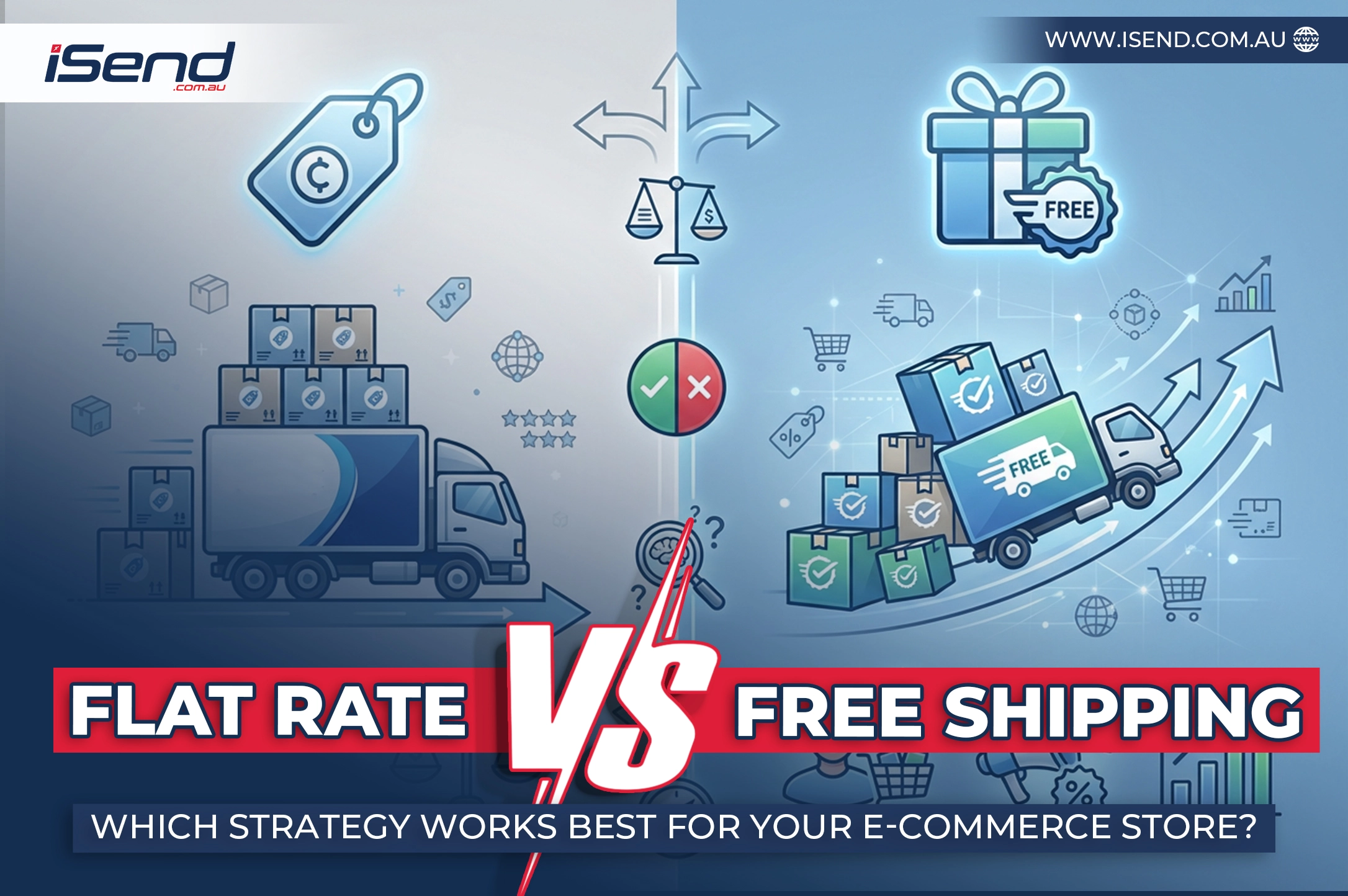
Shipment affects both revenue and profitability for Australian e-commerce companies. Almost 58% of merchants admit shipping is their greatest challenge. That is why choosing the correct route is important. Many retailers rely on flat-rate shipping to ensure delivery pricing remains accurately predictable. Others use free shipping to increase conversions and encourage customers to buy.
Why Shipping Strategy Matters for E-commerce Brands
The reasons are:
Cart Abandonment: Checkout drop-offs are common due to high delivery costs. The free shipping threshold, along with tools like live shipping calculators and AusPost eParcel Standard, will ensure that customers are aware of when they will be eligible for free shipping. This reduces any surprise costs and improves conversions.
Customer Loyalty: Transparent delivery options can build trust. Providing free shipping on selected products, with the help of real-time delivery tracking, SMS notifications, and padded mailing bags, will enhance the customer experience. This will encourage repeated purchases.
Cost Control: The free shipping threshold affects the profit margin. Platforms like Shippit and isend, as well as prepaid satchels and cubic weight calculators, enable retailers to reduce shipping costs. This ensures quick and reliable delivery.
Competitive Edge: Predictable pricing can give a brand an extra advantage. Flat-rate shipping options with companies like Toll Priority, DHL Express, and CouriersPlease, eco-mailing boxes, and tamper-evident satchels offer a transparent and competitive benefit.
Scalable Operations: With an increase in order volumes, automation becomes important. Tools like Magento 2’s multiple flat rate shipping, batch label printing, barcode scanners, and pick-and-pack trolleys simplify the fulfilment process even during peak seasons.
Clear Expectations: Educating customers about delivery can reduce confusion. Explaining what flat-rate shipping means and using ETA calculators, delivery window selectors, and return labels can set accurate expectations and eliminate WISMO queries.
What is Flat Rate Shipping?
It is a method that attaches a fixed price to parcels regardless of their size, weight, or shape. Standard shipping calculates fees based on distance or weight. However, the flat-rate shipping is based on the size of the box. Australian businesses can find predictable rates through AusPost flat-rate shipping services, Toll Priority, or CouriersPlease. This makes parcel delivery easier, transparent, and easy to manage nationally.
Advantages of Flat Rate Shipping
This shipping method can enhance the workflow of Australian businesses.
Price Consistency: Costs remain constant, no matter the weight or size of the parcel. This is precisely what flat-rate shipping means. The alternatives, like Fastway Courier Flat Rate Satchels, Sendle Standard Parcels, or StarTrack Flat Rate Boxes, can support reliable budgeting.
Time Efficiency: Flat rate models remove parcel-by-parcel calculations. ShipStation, Easyship, and automated order-sync dashboards enable faster shipping companies to handle flat rates and reduce manual labour.
Transaction Transparency: Pre-defined packaging options, such as A5 kraft mailers, rigid cardboard mail tubes, and impact-resistant cartons, help clarify what flat-rate shipping entails, as customers expect consistent charges based on the type of packaging.
Fewer Errors: Standard rates reduce errors due to the miscalculation of weights and sizes. Digital dimension calculators, auto-sorting conveyor systems, and standardised parcel templates are helpful for brands applying Magento 2’s multiple flat-rate shipping setups.
Disadvantages of Flat Rate Shipping
There are some limitations:
Australian post flat rate shipping may have limited options, such as small padded bags, medium cube cartons, or extra-rigid shipper boxes, which may be oversized or irregular in shape.
Light items would be more expensive with the flat rates compared to weight-based services offered by Sendle, Aramex, or other local carriers.
It may restrict custom elements, such as foil-printed boxes, branded wraps, or custom die-cut inserts.
Customers who expect high-quality unboxing experiences, such as textured gift boxes or reusable bags, might be disappointed. This can result in fewer repeat purchases.
What is Free Shipping?
It means that customers pay no additional delivery fee when buying online. It also makes shopping online more competitive. Australian retailers usually offset the cost in adjusted pricing or higher order values. With higher cost rates from AusPost, Aramex and Sendle, free shipping has become an effective strategy for increasing conversions, loyalty, and AOV.
Different Ways to Offer Free Shipping
There are many ways:
- Adjust the price to compensate for delivery costs without reducing competition.
- Set a minimum purchase—47% of shoppers add items to qualify for eligible purchases; aim for 35% over AOV.
- Organise loyalty programs to increase retention.
- Use promotional events like Boxing Day, EOFY, or Black Friday to increase conversion rates.
- Reduce costs with rate-shopping tools and inventory system technology.
- Place inventory near major supply centres and establish strong logistics partnerships to maintain profitability.
Advantages of Free Shipping
The benefits are:
- Increase sales and conversions with an app like ShipZip or Shopify Advanced Shipping Rules to remove delivery fees at checkout on Shopify, WooCommerce, and BigCommerce stores.
- Reduces cart abandonment from unforeseen AusPost, Aramex or Sendle rates that occur at common Australian shopping locations.
- Increases AOV as customers add extra items, who need to hit free-shipping minimums based on Klarna, Afterpay, or upsell tools like Rebuy and Zipify.
- Build loyalty when used in conjunction with reward programs, such as Yotpo Loyalty, Smile.io, or LoyaltyLion, which offer free shipping to repeat customers.
- With fulfilment automation, Shippit, StarShipIT, or ReadyToShip, it creates a competitive advantage over giants like Kmart, Myer, and Target, especially when combined with fulfilment automation.
Disadvantages of Free Shipping
It comes with some drawbacks, like:
- Cuts into profit margins because companies absorb shipping costs, despite having economical options like AusPost Prepaid Satchels or CouriersPlease flat-rate boxes.
- Increases operational costs for packaging, handling, and returns without any system support, such as Cin7, DEAR Inventory, or automated pick-and-pack stations.
- May needs to raise prices, which will affect competitiveness on Amazon AU, Kogan, and Catch Marketplace.
- Increases shipping load without the need for barcode scanners, batch label printers, and warehouse routing devices to handle higher volumes of shipments.
Flat Rate vs. Free Shipping: How to Choose the Best Strategy
The considerations are:
Analyse Data: You can track weight, dimensions, zones, and speed of delivery using the carrier APIs of AusPost, Sendle, and Aramex. Integrate with Shippit analytics or an Excel dashboard to compare costs and product margins. Thus, you can determine profitable levels.
Model Costs: Shipping platforms like Shippit, StarShipIT, or ShipStation model shipping situations using rate calculators and shipping policies to predict the revenue effect and customer response to flat-rate or free shipping.
Test: Conduct A/B testing on Shopify, WooCommerce, or BigCommerce with dynamic shipping conditions and cart messages to maximise conversions and AOV.
Transparency: Live Rate Calculators and progress bars give precise shipping charges at checkout. This creates trust and reduces cart abandonment.
How Isend Shipping Automation Helps You Optimise Both Strategies
Transparency: Isend also supports openness and clarity regarding fees, exchange rates, and services, providing its clients with complete transparency on each transaction to make informed decisions.
Innovation: Utilising the latest technology, the company offers a seamless user experience. This enables its solutions to stand out in the industry and enhances operational efficiency.
Security and Trust: Isend ensures the safety of funds and personal data by adhering to strict regulatory practices. Thus, the team provides clients with reliable protection and privacy.
Global Connectivity: The company enhances financial inclusion and cross-border cooperation. Thus, they connect individuals and firms globally to support growth.
When to Use Flat Rate vs Free Shipping
The flat rate is best suited for heavier or uniform parcels, such as tool kits from Steel Grip AU, ceramic bundles from Clay Nest Studio, or meal-kit boxes where weights are consistent, and the costs for nationwide delivery remain predictable. Free shipping is utilised for small parcels, such as serums from Glow Bay Skincare, apparel mailers from Urban Thread Line, or small stationery packages from Paper Mint AU, where margins can cover the costs. A threshold like “Free Shipping over $50” carries a strong correlation with conversions and AOV.
Final Recommendation: Build a Strategy That Boosts AOV and Conversions
A balanced approach—flat rates for heavier parcels and threshold-based free shipping for lighter ones—helps brands lift AOV, improve conversions, and reduce shipping costs while keeping checkout predictable and customer-friendly across diverse product categories.
Frequently Asked Questions
Does flat rate shipping take longer?
Not always. Flat-rate shipping usually follows standard courier timelines, although remote deliveries in Australia may take slightly longer, depending on the parcel type.
Is it cheaper to opt for flat-rate shipping?
Yes, in many cases. It helps businesses to reduce shipping costs, especially for heavy or zone-based parcels.
What is flat rate shipping in Australia?
Australia Post offers flat-rate shipping with a fixed price, where you pay one set fee as long as the item fits the prepaid packaging.
What does “flat rate” mean in shipping?
It defines a consistent shipping fee applied to qualifying parcels, regardless of distance, and sometimes regardless of weight.
Recent Posts
-
-

-

What Is Ecommerce Fulfilment & How It Works
March 3, 2026 -

A Complete Guide to COGS Computation
February 12, 2026 -

Custom Duty India: Rules You Must Know Before Shipping to India
February 12, 2026