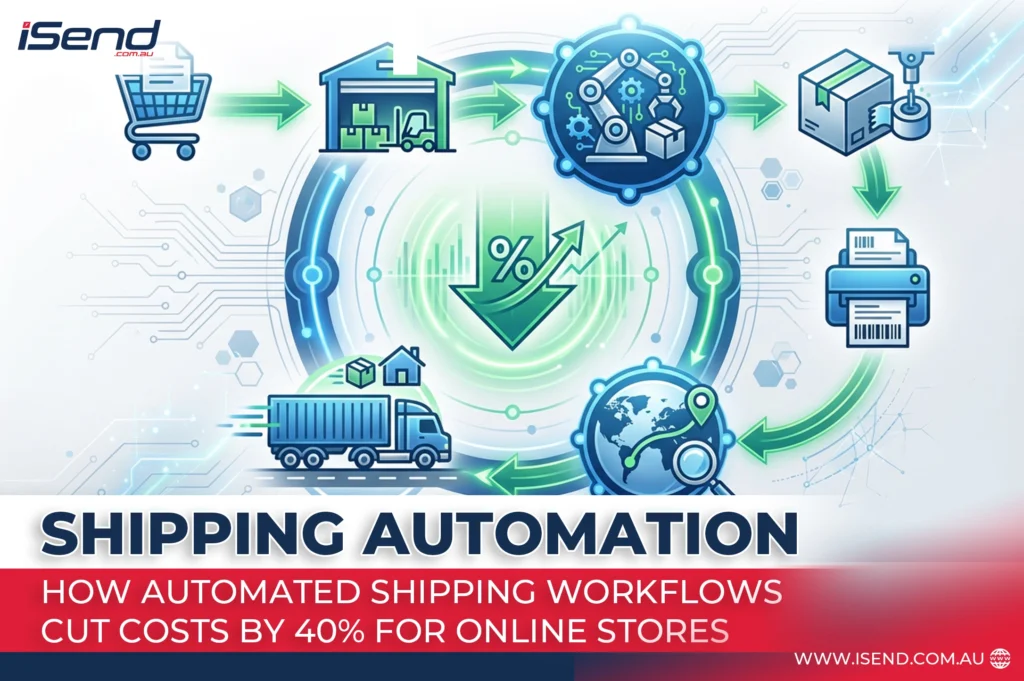
Shipping Automation: “How Automated Shipping Workflows Cut Costs by 40% for Online Stores

Shipping plays a massive role in how any online shop works. If you sell online in Australia, you know that demanding customers need fast delivery, quick returns, real-time tracking and no excuses. Over 9.8 million Aussie households shopped online in 2024. They expect speed on every purchase. Shipping automation software can reduce shipping errors, increase shipping rates, and lower costs by up to 40% as demand rises. What Is Shipping Automation? It is a digital platform that manages order synchronisation, labelling, carrier selection, tracking, and returns without requiring human intervention. Online retailers can eliminate repetition, errors, and streamline end-to-end processes by utilising shipping integration tools. Modern platforms rely on: Automation is no longer just a choice. It is key to staying competitive among brands specialising in e-commerce shipping cost reduction. Practically, the Shipping automation software simplifies every step from order placement to final delivery. It improves speed, fulfillment accuracy, and reduces labour costs. With eCommerce shipping automation, teams can do: How Shipping Automation Works? It simplifies each operation by integrating eCommerce platforms, warehouse systems, and carriers through a single workflow. Order Integration Orders automatically sync with sites like Shopify, WooCommerce, Amazon, and eBay to your system. It is an essential part of automating the order-filling process, eliminating manual input, reducing errors, and increasing speed during high-volume periods. Label & Document Generation Shipping labels, invoices, custom slips, and barcodes are generated instantly. Multi-carrier shipping software will immediately match each label with the appropriate carrier format, such as Australia Post, Sendle, DHL, FedEx, Toll, or Aramex. Auto-print batching enables your packing team to print 50-500 labels with a single click, facilitating quick processing. Automated Carrier Selection The system compares delivery speed, weight, distance, and pricing to select the most suitable carrier for the shipment. This step directly supports shipping cost reduction. Thus, businesses can save more per parcel by routing the shipments through the most efficient provider. Real-Time Tracking Automation Customers receive tracking numbers through mail or SMS. A real-time shipping tracking dashboard enables businesses to monitor each parcel in transit. Thus, it can minimise the number of WISMO inquiries and enhance communication with proactive status updates. Automated Returns Management Approvals, return labels, and restocking processes are automated. Customers use a self-service portal. The system updates the inventory and refunds. It reduces manual workload and enhances the turnaround time of returns. Inventory, Picking & Packing Automation Stock levels are synced in real-time across all channels. With Supply chain automation tools, the system provides optimised pick lists and improved picking accuracy, increasing from 92% to 99.7%. This directly promotes Delivery speed optimisation by cutting fulfilment time and minimising mistakes. Why Shipping Automation Matters for Australian Online Stores? Here is why automation has become essential for modern Australian eCommerce operations. Australian online stores experience a surge in orders during events like Click Frenzy, Boxing Day, and EOFY sales. Through Order fulfilment automation, retailers can handle thousands of orders per day. They do not need to hire more employees. This minimises human error and ensures a steady fulfilment rate. In Australia, freight rates are the highest in the world due to the long routes and surcharges for fuel costs. Automation helps e-commerce shipping cost reduction by comparing carrier rates and eliminating expensive errors, which are crucial for maintaining healthy margins. Speed is important as 67% of Australian consumers expect faster shipping than they have in the last two years. With Supply chain automation tools, warehouses will be able to optimise picking, avoid stock discrepancies, and send parcels more effectively across states. Deliveries between Perth, Sydney, and Darwin can take several days due to the long distances involved. Automation increases the speed of internal fulfilment through Delivery speed optimisation. It enables brands to deliver faster and compete with large retailers such as Myer, THE ICONIC, and Kmart. Aussies check parcels are updated 5-7 times on average per order. A real-time shipping tracking system enables businesses to send SMS or email updates to customers in real-time automatically. It can reduce WISMO inquiries by up to 65% and increase buyer confidence in regional and metropolitan areas. Approximately 9.8 million Australian households conduct online shopping annually, and the number of orders increases by 30 to 45 per cent in high seasons. Companies using Automated shipping solutions in Australia can scale smoothly, with no loss in delivery reliability or customer experience. How Shipping Automation Cuts Costs by Up to 40%? Shipping automation allows Australian retailers to reduce expenses and improve accuracy. Labour Cost Reduction Through order fulfilment automation, businesses can eliminate manual and repetitive tasks, such as entering orders, labelling, and tracking shipments. This reduces labour costs and allows employees to move into more strategic positions. Automated systems can process orders in just seconds and operate continuously, 24/7. Smart Carrier Selection Multi-carrier shipping software enables real-time comparison of carrier rates, based on weight, size, destination, and delivery speed. This provides a more cost-effective shipping route. Reduced Return Costs Through smart shipping rules, rules-based logic, and data validation, typical errors are automatically removed, including incorrect labels, addresses, and orders. This reduces return costs, reshipping fees, and customer complaints. Faster Warehouse Processing eCommerce shipping automation accelerates picking, packing, and dispatch, creating optimised pick lists and updating inventory. Combined with Warehouse Management Systems, it ensures that there are proper stock levels. It also eliminates the occurrence of overstocking or shortages. Reduced Customer Service Load Using shipping integration tools, retailers provide automatic tracking updates, real-time alerts, and proactive notifications. This minimises the workload in service and enhances customer satisfaction. Benefits of Shipping Automation Here are the details: Repetitive tasks, such as printing labels, rate shopping, and tracking updates, are made faster. Systems using Automated shipping solutions in Australia receive order information, create labels, assign carriers according to preset rules, and integrate with inventory systems to automate picking, packing, and dispatch. Manual ecommerce operations risk typing mistakes, incorrect addresses, and delays in delivery. Automation ensures standardised workflows that avoid mislabels. This reduction in mistakes also leads to a decrease in e-commerce shipping costs by