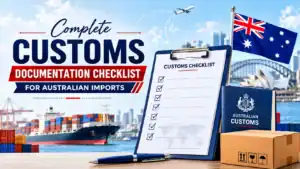


If you are importing goods into Australia in 2026, it is no longer a matter of choice, but a mandatory practice to be acquainted with the import tax Australia regulations. Australian import taxes may have a direct impact on your overall landing cost, whether you are ordering goods for personal use or business purposes.
Australia imposes a combination of GST, customs duty, and processing fees on imports. As you proceed to read, you will learn what the import tax in Australia is, how much you have to pay for importing goods, and how surprise charges can be avoided.
Before getting into calculations, it is worthwhile to take an overview of the functioning of the Australian import tax system. This will form the foundation of making smarter decisions on imports.
Key Takeaway
Importing goods into Australia can attract various taxes and fees based on value, nature and place of origin of goods. Australian import tax is not a single entity, but a combination of GST, import tax regulations and government processing costs.
In case the value of your shipment is more than certain limits, it is likely that you will pay much higher taxes. GST is receptive to even low-value imports because of the latest regulations imposed by the Australian authorities.
By understanding the import tax of goods in Australia under 1,000 AUD, GST regulations, and rates of duty, you can have a more accurate picture of the cost of logistics. Let’s break down each tax component step by step.
Key Import Taxes & Charges in Australia
The charges that are imposed on imports in Australia are a combination of various charges that make up your Australia import tax liability. The administration of these taxes is done by the Australian Border Force (ABF) and the Australian Taxation Office (ATO).
The amount of duties that Australia levies on imports is determined by variables such as customs value, type of product and country of origin. Knowing all the elements will help you compute the import tax more accurately.
Goods and Services Tax (GST) on Imports
The most prevalent form of tax on imports in Australia is GST. There is a 10 per cent GST that is usually paid on the overall value of imported goods, including shipping fees and insurance.
This means that GST is determined on the value of customs plus duty and transport expenses. In simple terms, it means that tax is paid on the landing cost, and not on the price of a product alone.
GST applies to most imports irrespective of whether the customs duty has been charged or not. This makes GST one of the significant components of the customs import tax regulations in Australia.
Customs Duty / Import Duty Australia
Import duty tax in Australia is also referred to as customs duty, which is imposed depending on the tariff classification of the product. The majority of goods have a duty rate between 0 and 5 per cent.
Certain goods, like books, and some medical goods, are free of duty. Other items such as clothing, footwear and textiles are subject to 5% rates of import duty in Australia.
The rate of duty you are charged will be based on your product code, based on the Harmonised System (HS) code. This code will decide how much import tax will be charged on your goods in Australia.
Import Processing Charge (IPC)
In the event that your goods are worth more than AUD 1,000, you have to submit a formal import declaration. This attracts an additional charge on your goods known as the Import Processing Charge (IPC).
IPC charges are different based on the method of how the declaration is lodged, i.e. electronically or manually. This fee does not come with GST or customs duty and should be included in your overall cost of duties in Australia.
IPC is inevitable for the commercial importers and is one of the most vital components of import tax. You need to plan so that you are not hit by surprise charges during imports.
Special Taxes
Some goods are subject to extra taxes on top of the normal import duty as per Australian regulations. Such special taxes pose the threat of multiplying your total import tax bill and need to be evaluated before the imports are shipped.
- Wine Equalisation Tax (WET): This is charged on imported wine and wine products, and is computed as a percentage of the wholesale price.
- Luxury Car Tax (LCT): This is imposed on importing vehicles that are priced higher than the maximum luxury price set by the government.
- Anti-Dumping Duties: Duties on goods that are imported at prices that are unfair as a method to protect Australian industries.
These are in addition to GST and customs duties. Consequently, they can significantly increase your costs on your Australia import tax in case your goods belong to any of the above categories.
Australian Import Thresholds (2026)
This table provides a quick reference for your readers to determine which charges apply to their specific shipment value.
Threshold Quick-Reference Table
| Shipment Value (AUD) | Customs Duty | Import GST | Processing Charge (IPC) |
| Up to $1,000 | Exempt (usually 0%) | 10% (Collected by vendor) | None |
| Over $1,000 | 0% – 5% (Standard) | 10% (Paid at border) | AUD $50 – $200+ |
| Alcohol / Tobacco | Always Applies | Always Applies | Always Applies |
How to Calculate Import Tax in Australia
Australia Import Tax Calculator
Landed Cost Calculator (AU)
Estimate your total duty and GST payable at the border.
Calculating how much import tax in Australia is charged on your goods requires the addition of various charges. You should be aware of the value of customs, the duty rate, and the rate of GST levied.
The overall formula may seem easy, but minor details can alter the final figure. Knowledge of this calculation would assist you in identifying accurate costs.
Basic Formula:
$$Customs Value (CV) + Customs Duty + Shipping \& Insurance = GST Payable (10\%)$$
Example:
If your imported goods are worth AUD $2,000 with AUD $200 shipping and 5% duty, then:
- Duty: $100
- GST: 10% of ($2,000 + $100 + $200) = $230
This provides you with a clear-cut idea of import duty tax calculations in Australia. Now, we can look at low-value imports.
Imports Under AUD $1,000 – Duty & GST Rules
The Australian import tax limit for goods of low value is AUD 1,000. Traditionally, the goods below this value were not subject to GST and duty.
But this has changed in recent years. Knowledge of the import tax in Australia below AUD 1,000 will be of importance for online businesses and small enterprises.
Why You Might Still Pay GST on Low-Value Goods
A lot of foreign merchants currently charge GST on low-value imported goods at the counter. It implies that you might make advance payments of GST despite the goods being below AUD 1,000.
Such a system guarantees payment of tax and minimises the time wasted at the border. When your goods have already paid GST, they will likely pass customs much more quickly.
Thus, even in cases where the imported goods have low value, the Australian import tax policies can still apply indirectly.
Goods Always Subject to Tax
Some products are taxed at all times, irrespective of their value. Some of these products are fuel, tobacco and alcohol.
The health, safety, and environmental policies make these items subject to excise duties and other taxes. This also makes them the most highly taxed imported goods in Australia.
When you are importing such goods, you will be charged more import tax on each occasion.
How to Pay Import Tax in Australia
The import tax payment is a structured process in Australia. Upon the arrival of your goods, the customs determines the amount to pay.
Step-by-step process:
- Get a notice from the customs or the courier.
- Review the responsibilities and GST.
- Pay through the customs portal, broker or courier.
- Release of goods for delivery takes place.
The majority of the couriers will allow you to pay the import tax over the online portal. The understanding of how to pay import tax in Australia helps in avoiding delays during clearance.
Free Trade Agreements (FTAs) & Reducing Your Tax
There are several Free Trade Agreements in place in Australia, which lower or completely eliminate the import duty Australia charges. Such agreements are applicable depending on the nation of origin of the products.
In case your goods are qualified, you can pay no customs duty but still pay the GST. This saves you a lot of money in terms of import tax costs.
To claim the benefits of FTA, proper documentation is needed, such as a Certificate of Origin.
Required Documents for Customs Clearance
In order to get through customs, you have to present the correct and complete documents. Missing papers will lead to time waste when it comes to clearance, and also lead to higher storage costs.
Some of the commonly required documents are:
- Commercial invoice
- Packing list
- Bill of lading or airway bill
- Import declaration
Accurate paperwork means your import tax calculation is right and lets you remain trouble-free.
How iSend Simplifies Your Import Process
iSend assists you in managing the logistics of imports by remaining in accordance with the Australian import tax regulations. You can see the accurate duties, GST and clearance requirements of your goods in a single platform.
iSend has combined shipping, documentation, and tracking with the help of technology to minimise errors and delays. This simplifies the process of handling duties in Australia and import processing charges.
Using iSend, you will be able to concentrate on the development of your business instead of worrying about the complexity of customs.
FAQ
What are the import taxes in Australia?
You may have to pay GST, customs duty, import processing charges, and special taxes such as WET or LCT.
How to avoid import duty in Australia?
You may pay less duty by importing duty-free goods or making use of the Free Trade Agreements wherever applicable.
How to calculate import duty?
The calculation of import duty is done by multiplying the tariff rate by the customs value of goods.
What items are exempt from import duty?
Medical supplies and some educational materials, such as books, are duty-free as per Australian customs.
How to find the import duty rate?
The tariff of the Australian customs can be checked by using the HS code of your product.
Conclusion
Understanding the rules of import tax in Australia in 2026 will help you avoid expensive surprises during the import process. From GST and customs duty to the processing fees, each of the component matters and adds up to the final cost.
By calculating the import tax accurately and taking advantage of any exemptions available, you avoid eating into your margins. Additionally, choosing advanced software platforms like iSend can fully automate the process and help you save cost and time.
Recent Posts


How to Handle Back Orders Without Wrecking Your Delivery Times
October 7, 2026

Top 7 Shipping Software for eCommerce Businesses in 2027
September 23, 2026

How to Reduce WooCommerce Shipping Costs in Australia
August 21, 2026